


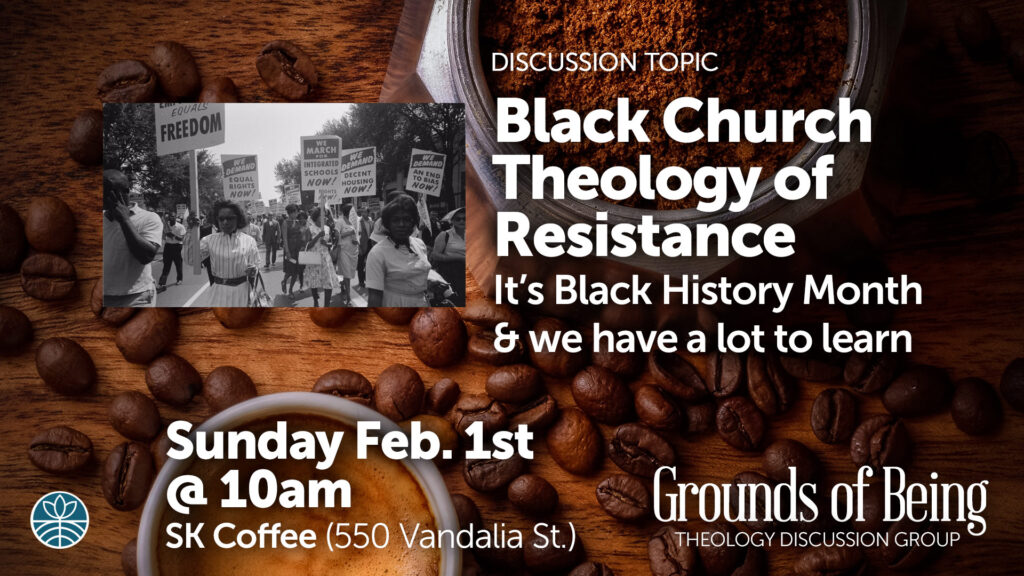
Over the past several months, the Twin Cities has become a crucible of conflict between the moral imagination of faithful people and the overwhelming force of state-sanctioned pseudo-military thugs. In Minneapolis–Saint Paul and cities across the United States, a massive DHS/ICE operation has deployed thousands of federal agents in the name of immigration enforcement, an operation under which two U.S. citizens, Renee Good and Alex Pretti, were shot and killed by federal agents here in Minneapolis last month. These murders have shaken many who had not previously engaged in political protest, awakened consciences across racial lines, and provoked a surge of ICE watchers and community resistance grounded in non-violent civil activism. This has sent some people of faith in search of a theology of resistance for the 21st century.
As we enter Black History Month, it’s important that we take stock of our theological inheritance in America. We don’t have to start from scratch; the Black Church in America has already done a lot of the heavy-lifting for us. From the demands of Reconstruction through the Civil Rights Movement of the 1950s and ‘60s, the Black Church in America has embodied a ‘Confessing Church’ for its time, calling the state to account when law and power deformed justice. In the same way that pastors and theologians like Dietrich Bonhoeffer resisted Nazism not simply as political dissent but as a gospel mandate, so we must investigate how Christian faith can inform resistance to government overreach, racialized violence, disappearance of our immigrant and refugee neighbors, and state-sponsored terrorism today. Our task is to wrestle with how faithful witness resists not only explicit injustice, but the narratives that justify it.
It’s also important to distinguish between two very different streams of theological and ecclesiastical expressions of Black Christianity in America. Today, there are many Black churches that follow in the traditions of Charismatic-Pentecostalism, but with a very specific emphasis on the “Prosperity Gospel.” These churches stand in stark contrast to the prophetic, grassroots tradition of Black churches that stand in the legacy of figures like Richard Allen, Sojourner Truth, Martin Luther King, Jr. and so many others.