



In this sermon, Pastor Der teaches on Paul’s argument to the so-called ‘Weak’ and ‘Strong’ factions in the house churches of Rome about how both Jewish and Gentile disciples are justified by “faith” in the same way that Abraham was.
In Romans 1.18–32, Paul employs language that echoes common Jewish stereotypes of Gentiles as particularly depraved and deserving of God’s wrath. Examples of this rhetoric can be found in Wisdom of Solomon. But Paul uses this rhetoric not to reinforce division between the Jewish and Gentile disciples in Rome. No! Paul uses it as a…
After having completed the 12-16 and 9-11 sections of Romans, we are leapfrogging over the 5-8 section to the 1-4 section, and returning to the foundation of the Christian faith: The Gospel. In Romans chapter 1, we discover that the Gospel Paul preached wasn’t the ‘Romans Road,’ but was instead about Jesus, not us; Good…
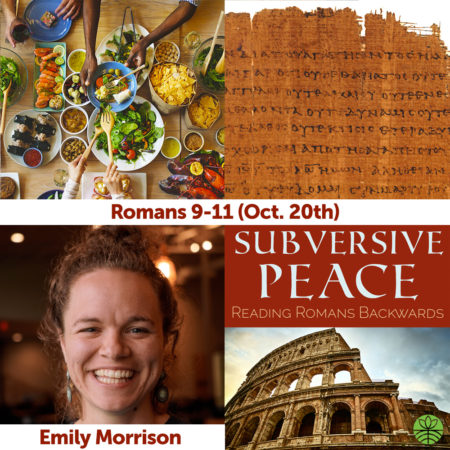
In this sermon, Emily Morrison breaks down one of the most confusing and misunderstood passages in all of the New Testament: Romans chapters 9-11. Paul is retelling the biblical narrative, reinterpreted in the light of who Jesus is and what he has done, for the sake of the unity of the church of Rome. The…